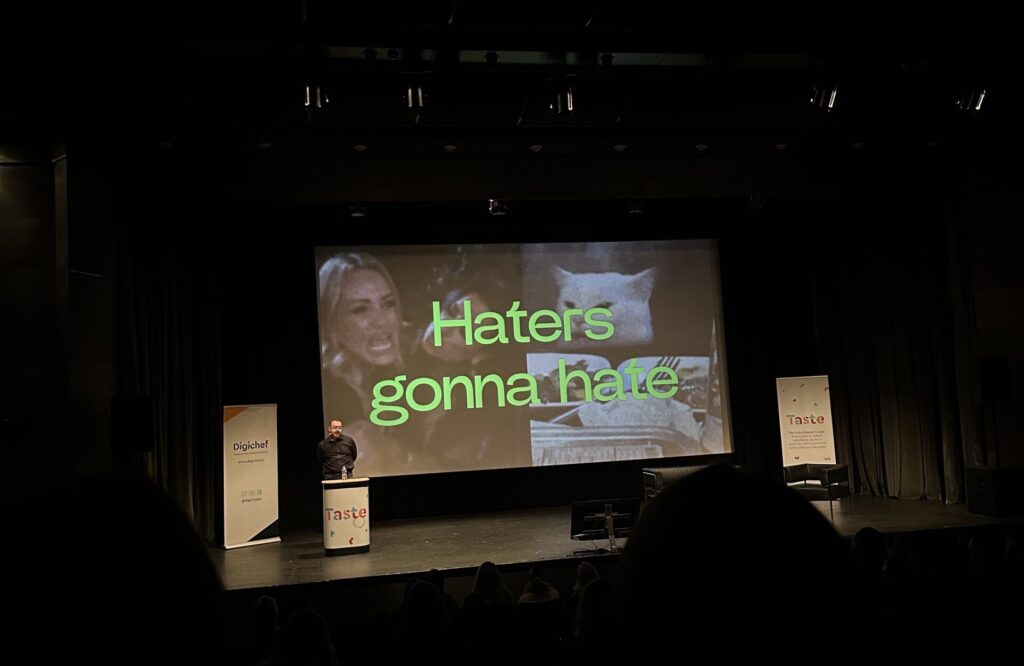
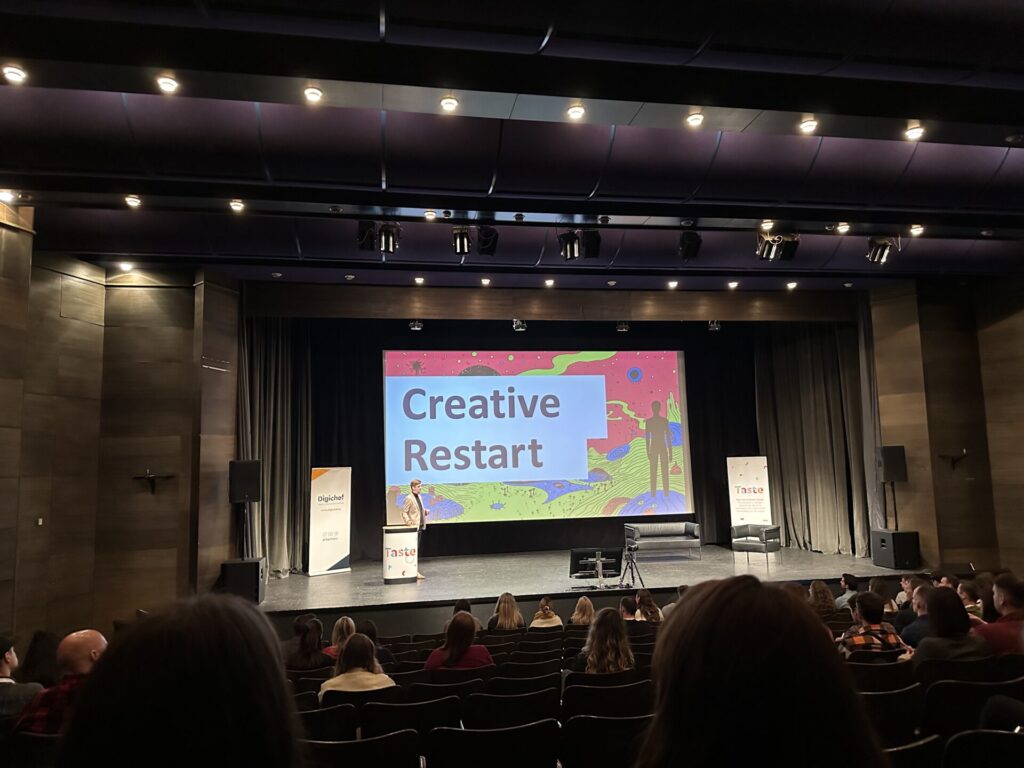
The last day of November, I visited the marketing conference Creative Restart, which took place at the Dlabačov cinema. Yes, you guessed it right, its main topic was creativity. The event was organized by Roman Číhalík in collaboration with the digital agency Taste.cz, and the day was hosted by moderator Michael Koch. How did it turn out? Let’s take a look.
Creativity is crucial, especially in marketing, for a successful campaign and brings many questions with it. What is creativity exactly? How does it work? Where does it come from? Most of us have a different answer to these questions. And Creative Restart was the place where you could open these topics together with other participants and inspire each other.
Missed the event? Or are you interested in some presentations in more detail? I have good news for you. You can watch all the lectures from the whole day on the website.
The conference had several interconnected parts. The morning block started with an opening speech by Michael Koch and a subsequent keynote by Roman Číhalík. He went back in time, emphasizing that creativity has its roots 70,000 years before our era. At that time, people gradually began to cooperate and create communities, each bringing a piece of their inspiration, which encouraged their creativity as a whole.
From the morning lecture block, I can’t fail to mention the elaborate presentation by Christophe Wechsler from Kiwi.com, who underlined the word creativity more than anything else. He presented the creative strategic model of the Kiwi company, which is based on ‘user-generated content’ campaigns. This model is based on the real experiences of ordinary people, thus generating much greater trust from customers, unlike influencer marketing. And it’s cheaper too.
Pavol Minár showed us the importance of the brand. According to him, every brand is a mental construct, and its meaning is key, but even more essential attributes are its vision, mission, and insight. He perfectly illustrated this with specific examples, such as advertising from Heineken, Magnum, or Solo Stove with Snoop Dogg.
The whole first block was concluded by Judita Růžičková and David Červený from Zaraguza, who showed us that even creatives and strategists can find a common language. It’s enough to set healthy boundaries between them, make sure they both speak the same language, and trust each other. But also verify.
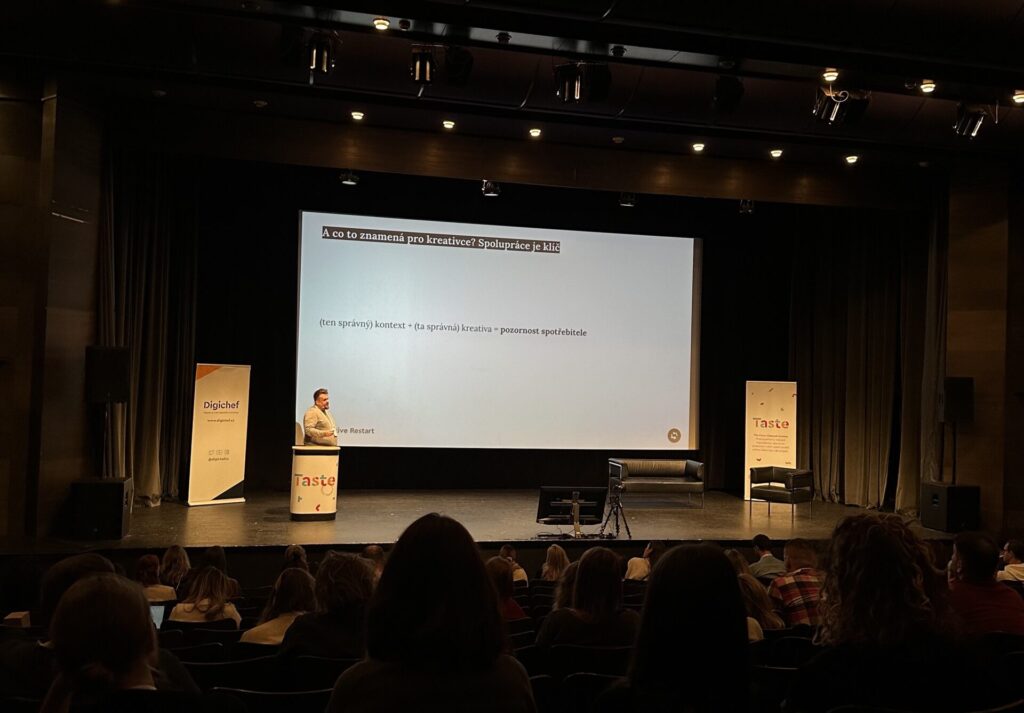
After a half-hour break, we were greeted by another program with three more lectures. Petr Šupolík emphasized the importance of contextual advertising, which is perceived very positively by users because it naturally gains attention and eliminates bad content. He added that with the equation ‘(the right) context + (the right) creativity = consumer attention’, you have won.
Leonard Savage from McCann Prague dealt with the permanent brief and immediately surprised everyone. According to him, creative briefs are a myth, like unicorns, and the only briefs that exist are business ones, which need a piece of that creativity. He showed us a few examples – for example, a brief from Gillette, which emphasizes the father-son relationship, and the Czech insurance company VZP, where prevention is key.
The last lecture in the second block was led by Atila Martins and dealt with craft, which, according to him, is a necessity, not just an option. The key to the right craft is to make it as simple as possible, create it for your audience, have clear goals and priorities, and devote enough time to it. Interested in more tips? Take a look at his presentation.
After the lunch break, we dove into the afternoon block, where we had 5 more lectures to look forward to. The last part of the conference was opened by Zuzana Magálová, who focused on the brief. She assured us that it’s okay to have chaos in your head at the beginning because the brief, according to her, makes our lives easier and organizes our thoughts in the right direction. The brief also serves as a kind of mirror, preventing us from slipping into subjectivity and helping with efficiency.
Jan Tyl talked about artificial intelligence and its potential in creativity. He presented us with basic AI concepts like ANI (narrow AI), which can only handle one task at a time, AGI (general AI), or even Super AI, which is superhuman intelligence. And finally, he showed us his projects Matylda, DigiHavel, or the work-in-progress Magic Diary, where artificial intelligence plays a leading role.
Then came the rather buzzword – burnout. A problem that everyone talks about, but few know how to recognize it in time. Alice Budová showed us several tips and advice on the story of Magdaléna on how to achieve balance in life and avoid workaholism. Do you feel emotionally numb? Doesn’t even a weekend off or even a vacation help you? These are typical signs of burnout, so don’t underestimate it and start dealing with it in time.
After the last short break, Alan Záruba took the stage and shared his enthusiasm for sports. We all know the Livesport app, but he talked about Flashscore, the company’s flagship product, and the launch of the new Flashscore News service. This takes traditional sports journalism to the next level, using visual data analysis with the involvement of AI-powered content creation. The day was concluded by Vojtěch Prokeš from Behavio, who showed us on specific campaign examples that just fun creativity is not enough for an ad to be successful, but you also need to think about the key message and how to execute it.
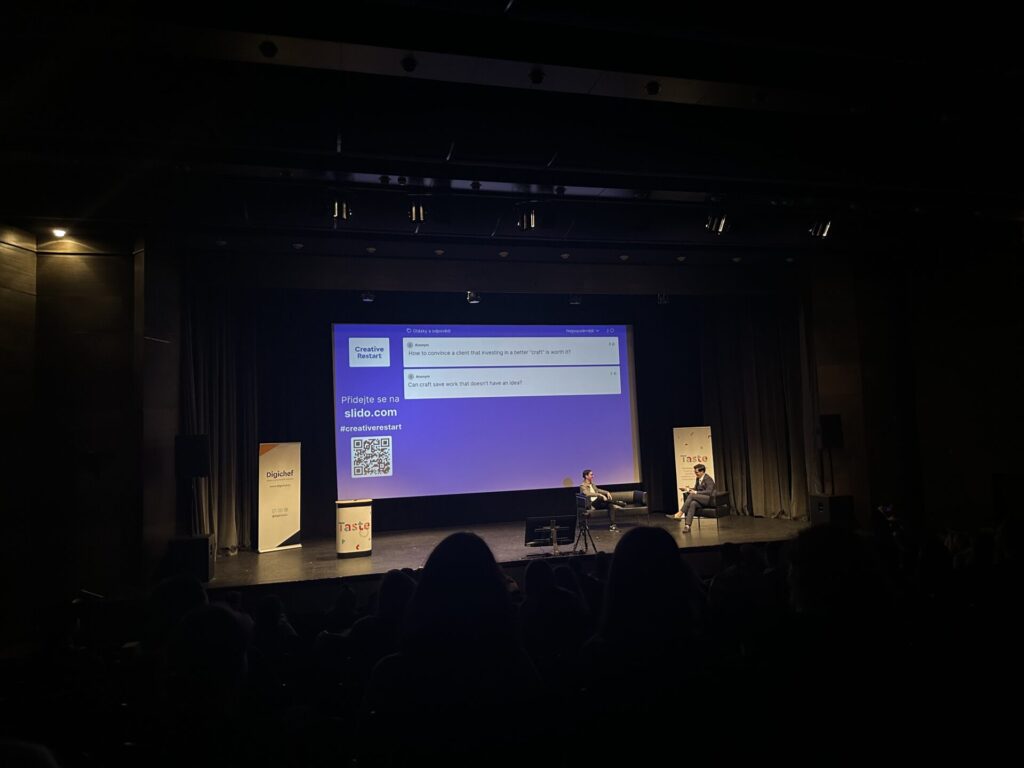
The whole Creative Restart program was excellently interconnected, and the individual lectures fit beautifully together. A plus was the possibility of interaction with the speakers, as the audience could ask anonymous questions through Slido after each lecture. The only minor minus was that there was usually not much time left for these questions, so not all of them could be answered.
What I can’t help but mention are the chosen spaces. The cinema was more than sufficient for the lectures. But when all the participants rushed to the catering during the lunch break, it became clear that there were not many options to sit down and eat. Most participants had to sit on the stairs or stand with their food. And soup is quite difficult to eat standing up…
More than positive. Despite the minor details, the conference was beneficial, and it was clear that Taste had already organized several Restarts. Even though the conference lasts all day, the fast and interesting lectures keep your attention. Creative Restart analyzed creativity from several angles and emphasized that creativity is not just about marketing and products, but about the overall perception of the world and our view of it. To maintain creativity, you sometimes need to step out of your comfort zone and be open to stimuli from the outside environment, which you can then just connect together.
So, see you at the next Creative Restart?