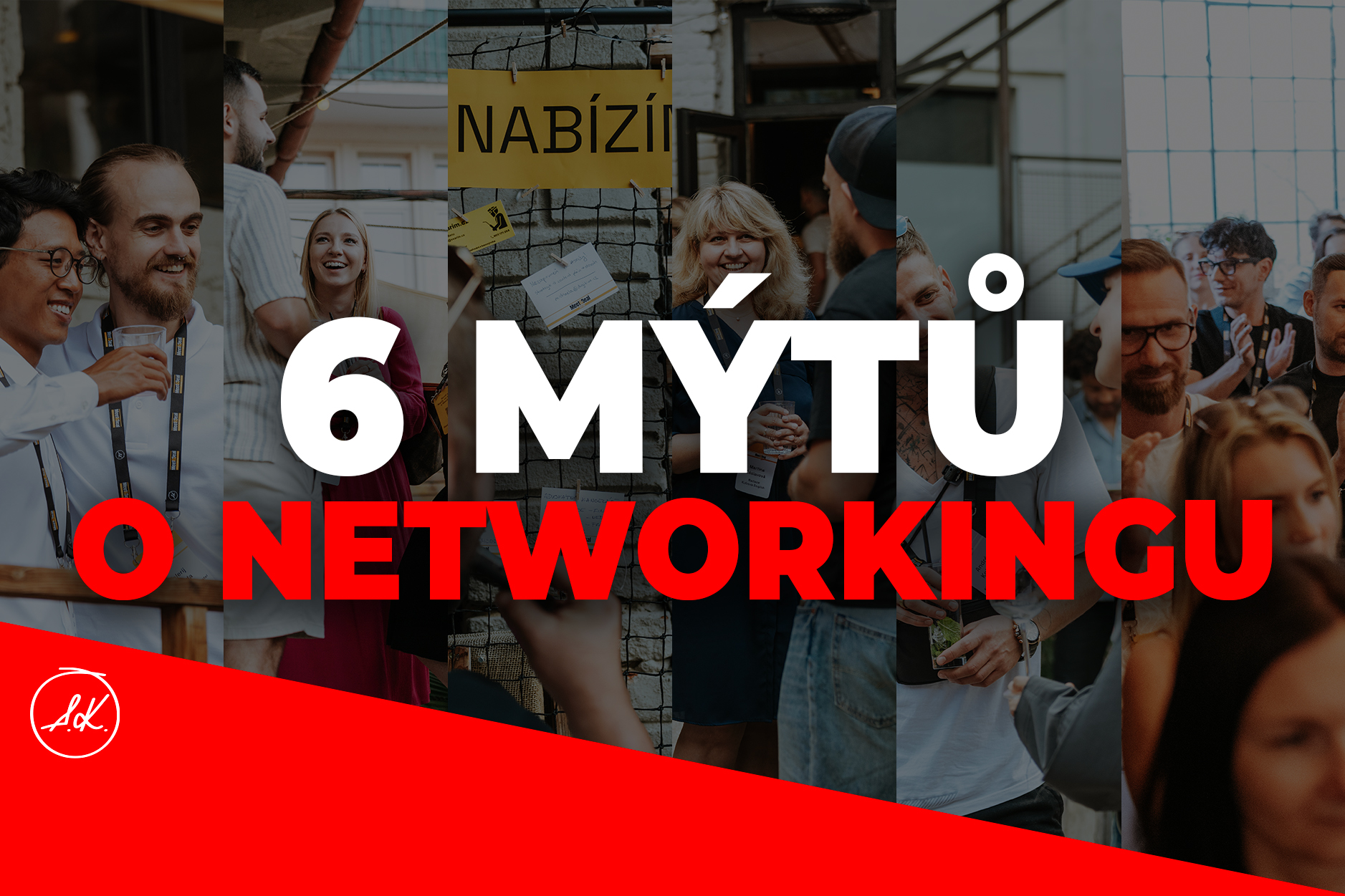
My business is built on networking, and I see real benefits from it on a daily basis. I myself organize the most nourishing networking in the form of Meet&Deal events, where this is further confirmed. But there are still many people who do not consider it important. Maybe it’s due to lack of information. That’s why I decided to introduce 6 of the biggest myths about networking and set the record straight.
Myth #1: Networking doesn’t work for me, my product, or my service Networking works. And for everyone, always. Networking is not about selling. Its function is to establish and maintain contacts. It’s a business strategy that utilizes interpersonal relationships and interactions. Whether you’re trying to build on existing relationships with people you already know, or build new ones, networking is one of the most powerful tools for business, freelancing, and even for developing your career as an employee.
Myth #2: Networking is easy For me, it’s kind of true, but that’s because I’m an extrovert and have been doing networking intensively for several years. For beginners or people who have trouble with self-confident presentation, it’s definitely not easy. For successful networking, you need to combine several things, such as: – Mastering basic skills – Understanding human interaction – Mastering sales skills – Appropriate attire and overall image Networking means constantly learning, trying what works, and getting to know new people, each of whom behaves and acts completely differently. In short, it’s a development process that shapes you as well.
Myth #3: Networking success always comes immediately Shaking hands doesn’t automatically create a deal. At least usually not on the first meeting. A few minutes of conversation may not bring immediate results, although it can happen, especially if it’s a relationship you’ve been building for some time. Building relationships takes time, trust and mutual respect. On the other hand, if you meet someone on a recommendation, it can make the path to trust easier and you can close a deal immediately after meeting. But again, that’s thanks to previous networking.
Myth #4: Networking means handing out business cards It actually happens quite often at various so-called networking events. You sit at a table, one person takes a stack of business cards from you, and when you leave, you get a stack of everyone else’s business cards. What’s the point of that? Absolutely nothing. I don’t reject business cards, but most of them end up in the trash. Because a business card only makes sense when people connect it directly to you. It’s different when someone asks you for your business card than when you hand out dozens of business cards to people you meet.
Myth #5: Networking is about meeting as many people as possible Even though at Meet&Deal I always want to bring as many people as possible, it doesn’t mean you have to meet and get to know everyone. I want you to have a choice. More contacts doesn’t necessarily mean more deals. On the contrary, getting to know a smaller number of people, giving them some time and listening to them, can bring much better and sweeter fruit. It’s not about the first contact, but about building relationships. But I’m repeating myself. Specifically, how many people you met do you remember the next day? All of them? Then you’re probably doing it right. If not, try reducing the number and focus more on the given people.
Myth #6: Networking is about attending as many events as possible Again, I may be an exception that proves the rule. In a year, I attend dozens of networking, e-commerce and marketing events. Now it’s not as intense as it used to be, because I choose the events more carefully. Visiting all possible events across different industries won’t automatically guarantee you success. The point is to focus more on a certain type of event. For example, e-commerce events are attended by a fairly similar community of people. Once you penetrate such a community and are regularly visible within it, it will strengthen your credibility and perception of your authority within the community. And that’s an easier path to deals.
Networking will work best for you if you look at it strategically.